
Your AI can give you an answer. We make it show its work.
In the agentic era the answer is free — the work is the asset. Vivanti builds the data foundation, the reasoning capture and the evidence store, so every autonomous decision arrives with its receipt: the data it stood on, the reasoning it followed, the lineage home.
A Vivanti whitepaper, in collaboration with AWS · Dagen.ai · ClickHouse
When the signature disappears
For as long as enterprises have made consequential decisions, a person signed them. You could walk over and ask why. Autonomous agents remove that signature by design — that is the whole source of their value. But in a bank, a hospital, a freight network or a government agency, a decision that cannot be traced is a decision that cannot be relied upon.
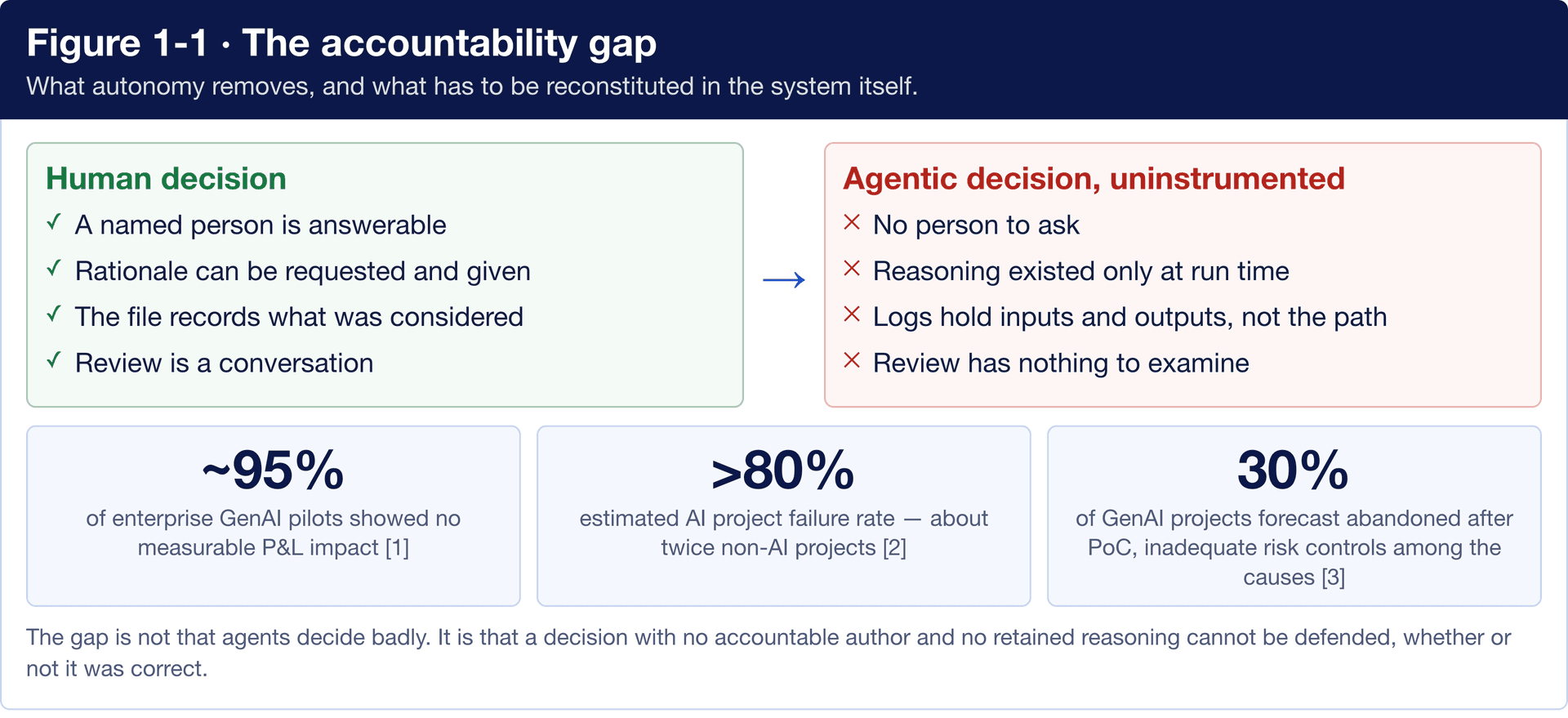
The answer is free. The work is the asset.
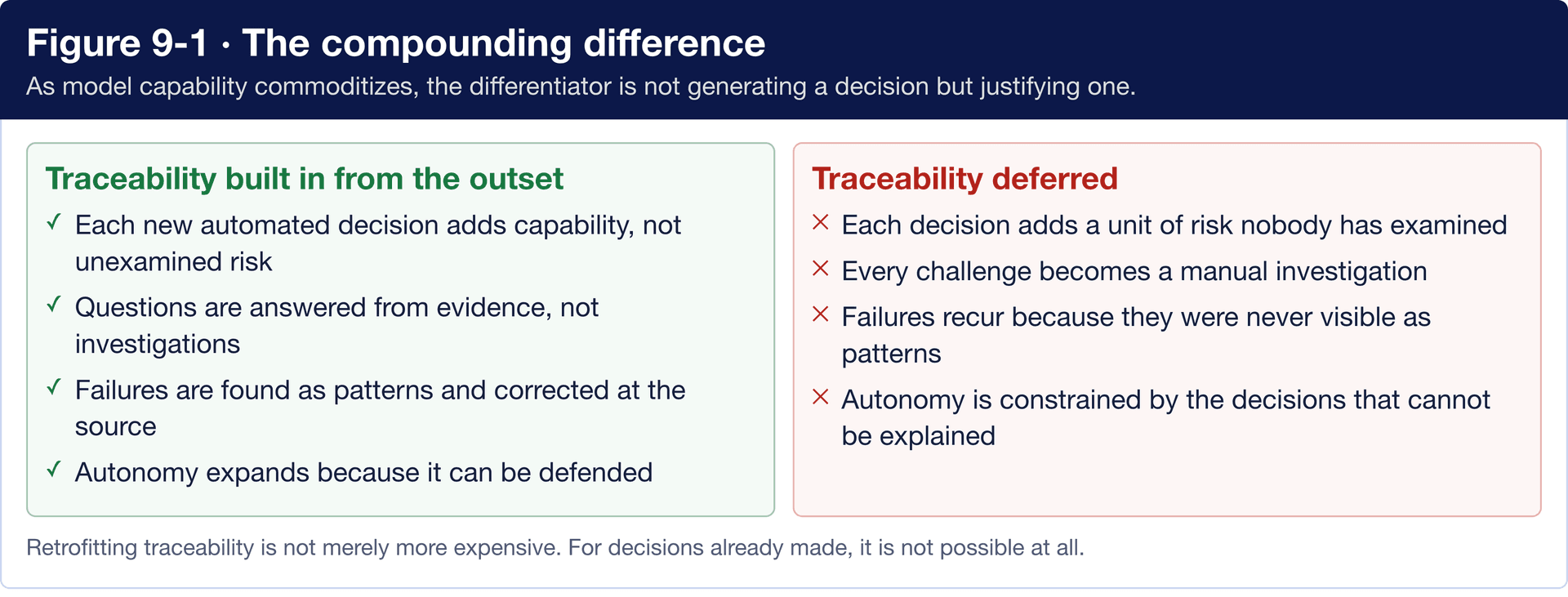
Most of this market sells the same three words — trust, explainable, governance — as though traceability were a compliance tax you pay to lawyers. The production reality is closer to the inverse. A decision whose basis can be produced on demand never has to be re-investigated, re-litigated or suspended pending review.
Cognitive traceability isn’t overhead. It’s the reason you’re allowed to go fast.
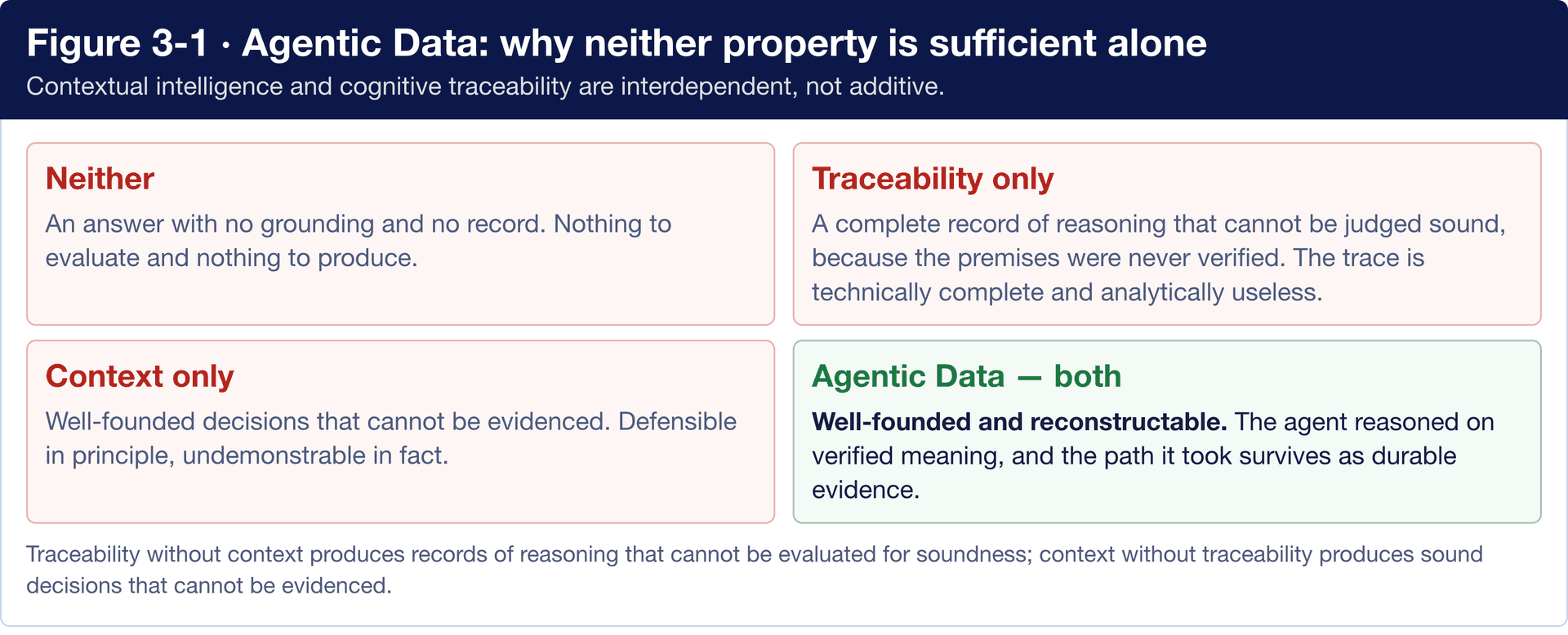
We call the capability Agentic Data, and it has two halves. Contextual intelligence is the agent operating with the business definitions, lineage and institutional knowledge it needs to reason correctly. Cognitive traceability is that reasoning captured as durable, inspectable evidence at the moment of the decision. Neither half is sufficient alone.
A seven-step blueprint, not a product
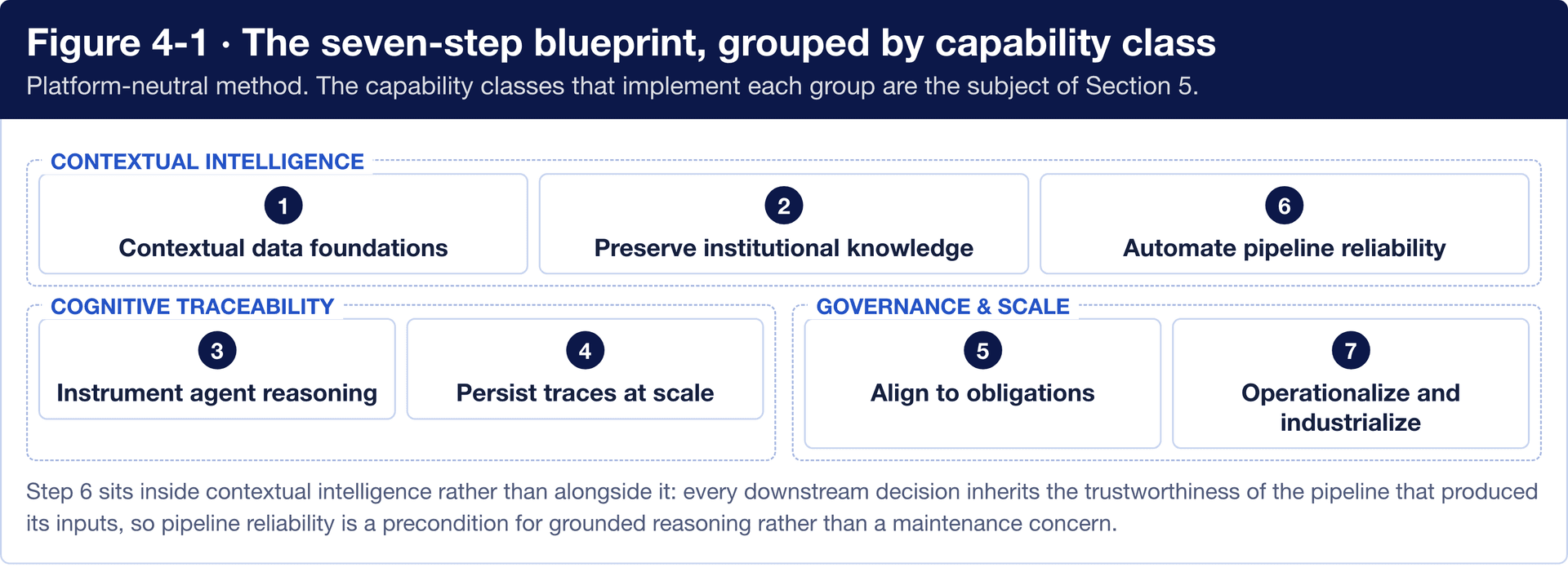
The whitepaper sets out a platform-neutral method for implementing cognitive traceability at enterprise scale, then shows the classes of technology required to support it. You do not buy Agentic Data. You build toward it, one high-consequence decision at a time.
Regulation is codifying this
The EU AI Act requires high-risk systems to automatically record events across their lifetime, and to retain those logs for a defined minimum period. Traceability is moving from best practice to a condition of lawful operation.
Coverage is a deployment property
An estate where nine of ten agentic workflows are instrumented does not have ninety percent traceability. It has a defensible position on nine and an undefended one on the tenth — and the tenth is the one you’ll be asked about.
Retrofitting doesn’t work
A trace assembled after the fact records what a system can still remember. A trace emitted during execution records what actually happened. For decisions already made, there is no later.
Three planes, all live at once
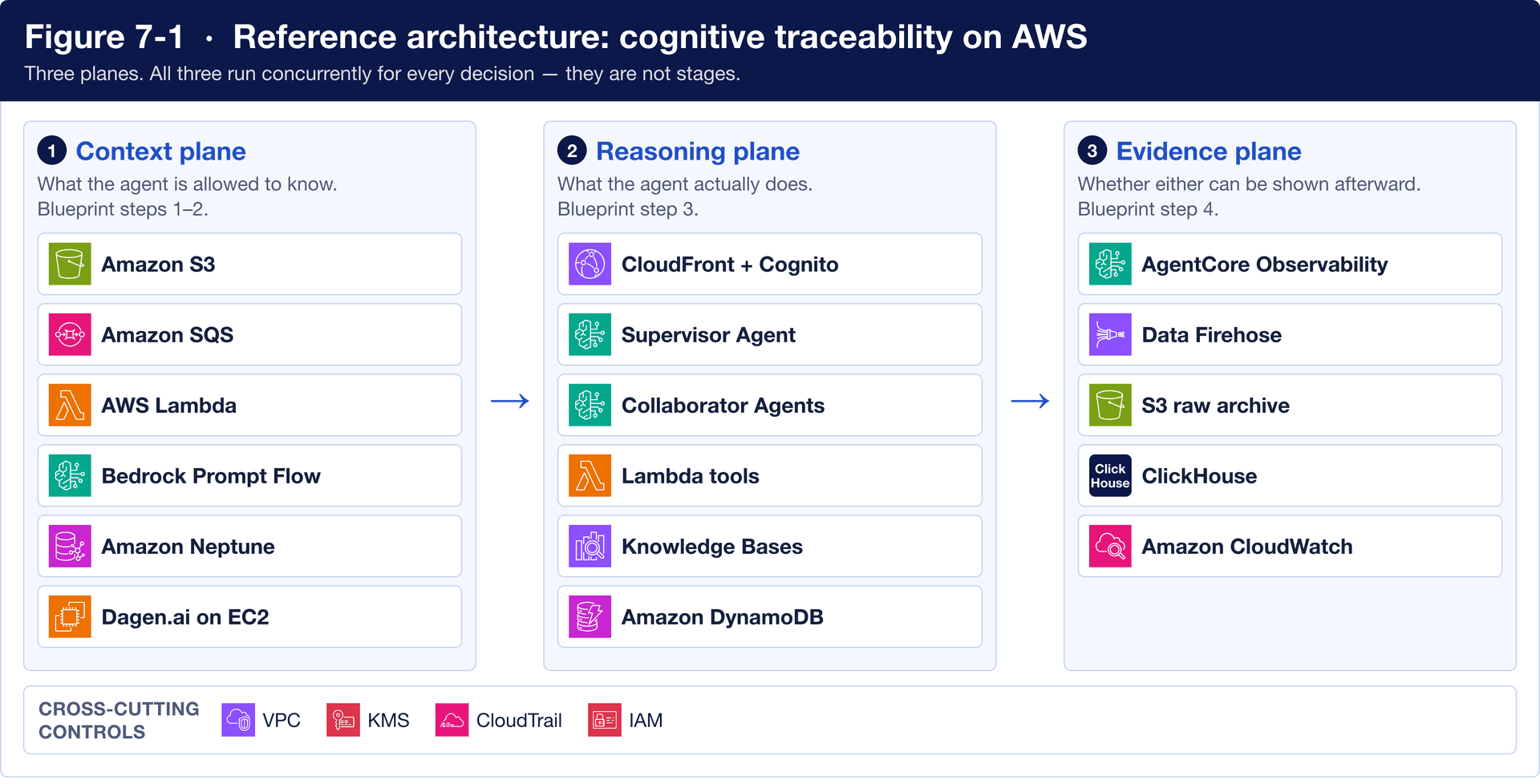
The context plane determines what an agent may correctly conclude. The reasoning plane determines what the agent does. The evidence plane determines whether either can be shown afterward. The whitepaper walks the full reference build on AWS — every service generally available, nothing dependent on a preview capability.
- Dagen.ai
- Agentic data-pipeline infrastructure: a coordinated team of specialist agents designs, deploys, monitors and remediates pipelines, over a tri-layer memory — episodic, procedural and semantic — that preserves why a pipeline exists independently of the engineers who authored it.
- AWS
- Amazon Bedrock AgentCore Observability captures each reasoning step, tool invocation, memory retrieval and output during agent execution, emitting standardized OpenTelemetry telemetry — on infrastructure carrying the security and compliance controls regulated environments require.
- ClickHouse
- A real-time analytical database for large-scale observability, so the evidence can actually be retrieved inside an examination’s timeframe. Anthropic has publicly described it as instrumental to the development of its Claude 4 model.
- Vivanti
- Two decades of data preparation and activation for regulated enterprises. We industrialize the pattern — the disciplined conversion of AI capability into governed, production-grade business value.
Show Your Work: Cognitive Traceability for Agentic AI
A Vivanti whitepaper, in collaboration with AWS, Dagen.ai and ClickHouse. Written for the data, AI and risk executives deploying agentic systems where the decisions have to hold up.
- 01The accountability gap, and what has to be reconstituted in the system
- 02A seven-step blueprint for cognitive traceability at enterprise scale
- 03The full reference architecture on AWS, walked end to end
- 04What the EU AI Act’s record-keeping articles actually require
- 05Security, retention and cost once it leaves proof of concept
- 06What it looks like across BFSI, media, supply chain, health and government
Built for regulated, high-consequence industries
Banking, financial services & insurance
When the regulator asks why the agent denied the claim, answer with a query — not a war room.
Media, entertainment & sports
Millions of automated calls a day, each one defensible against safety policy and brand guidelines.
Supply chain & logistics
When an autonomous system reconfigures the network, partners can see the rationale behind the shift.
Health & life sciences
Auditable by design, because traceability where care is concerned is a prerequisite for safety.
Government & education
Public accountability at machine speed, with a durable record when questions arise.
Bring one decision you wish your AI could prove.
Thirty minutes. We’ll map exactly what it would take to make that one decision reconstructable, end to end — the data context, the reasoning capture, the evidence store. No slideware, no obligation.
Book a 30-minute sessionPrefer to write first? jules.trono@vivanti.com